
Locally owned · Fully insured · 50+ five-star reviews
Blog
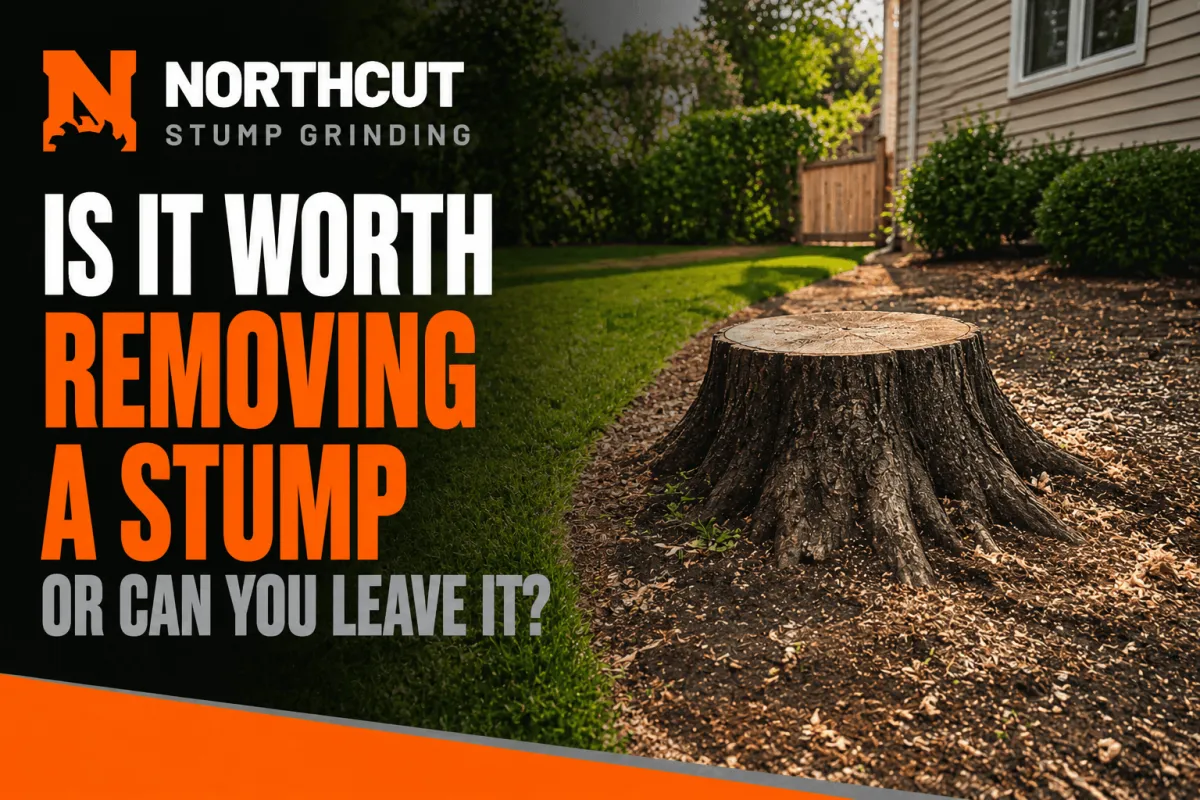
Is It Worth Removing a Stump or Can You Leave It?
A Question Worth Thinking Through
After a tree comes down, the stump is usually the last thing anyone wants to deal with. The tree is gone, the cleanup is done, and the stump sits there looking like a problem you can kick down the road. Sometimes you can — for a while. But there are also situations where leaving a stump becomes a genuinely costly decision later. Here’s an honest breakdown of both sides.
When Leaving a Stump Is a Reasonable Choice
There are legitimate scenarios where leaving a stump makes sense, at least temporarily. If it sits in a back corner of a large lot, is hidden by landscaping, and isn’t interfering with anything, the urgency is low. Some homeowners in the Twin Cities, Minnesota leave stumps for years without any meaningful consequence.
Cost is also a real factor. Stump grinding isn’t expensive relative to other home maintenance work, but it’s not free. If money is tight and the stump isn’t causing an immediate problem, deferring it is defensible.
Some people genuinely want the stump. A flat, stable stump can serve as a garden pedestal, a seat for outdoor art, or a small table in a casual setting. If that’s the plan and the stump is healthy and stable, there’s nothing wrong with keeping it.
When Leaving a Stump Becomes a Real Problem
The problems with leaving a stump tend to build slowly and then become obvious all at once. Here are the four situations where deferring creates a real liability.
1. Regrowth
Many tree species common to the Twin Cities, Minnesota — silver maple, cottonwood, and several oak varieties — send up new shoots from a cut stump within the first growing season. Left unchecked, they’ll grow aggressively, fed by the established root system. Within five years, some species produce a dense multi-stemmed thicket that is significantly harder and more expensive to remove than the original stump would have been.
2. Pest Activity
Decaying wood is an attractive habitat. Carpenter ants don’t eat wood the way termites do — they excavate it to build galleries. A rotting stump provides ideal conditions: soft, moist wood with consistent moisture retention. The problem is that carpenter ants in a stump don’t stay in the stump. As the colony matures, satellite colonies establish in nearby wood — often a fence post, deck board, or garage wall. The path from stump to structure is short on any standard suburban lot.
3. Fungal Spread
Fungal growth on older stumps — mushrooms, conks, and other fruiting bodies — is visually obvious but not always the main concern. The issue is underground. Root rot fungi can travel between connected root systems. On residential lots in the Twin Cities, Minnesota where trees are planted relatively close together, an infected stump has a realistic pathway to adjacent healthy trees through shared soil and root contact. By the time fungal infection is visible in a nearby healthy tree, the problem is already well established.
4. Safety and Property Value
Stumps that settle low into the lawn — partially decomposed and covered with grass — are genuine tripping hazards. They catch feet at unexpected angles and are harder to see than prominent stumps. On any property with regular foot traffic, that’s a liability exposure. From a real estate standpoint, a visible stump in the front yard or near the entrance affects buyer perception in an active market. The cost of grinding is almost always recouped through presentation.
How to Decide: A Quick Reference
The right answer depends on where the stump is, what species it is, and what you plan to do with the space. Use this table to assess your situation.
Frequently Asked Questions
How long does it take for a stump to rot on its own?
Depending on species, soil conditions, and climate, stumps in Minnesota can take 5–20 years to fully decompose. Hardwoods like oak and maple take longer than softwoods like pine or poplar. Chemical stump treatments can accelerate the process but still take years.
Can I grind a stump myself with a rental machine?
You can, but rental grinders are smaller and less powerful than commercial units. They take longer, often can’t reach deep enough, and don’t fit through most backyard gates. For most homeowners, the cost difference between renting and hiring a professional is smaller than it appears.
Does a stump need to be fully dead before grinding?
No. Stump grinders work on green stumps just as well as dead ones. Tree species and stump size matter more than whether the wood is live or dead at time of grinding.
Will a tree grow back after grinding?
No. Grinding destroys the cambium layer and goes below the root collar, which prevents regrowth. Surface shoots that appear afterward are coming from lateral roots that weren’t reached — they can be pulled by hand and will stop appearing within a season or two.
Does homeowners insurance cover stump removal?
Generally no, unless the stump is the result of a covered event like storm damage and your policy includes debris removal. Elective stump removal is a maintenance expense, not a covered loss.
Bottom Line
Whether you decide to act now or wait, having a realistic picture of what a stump will and won’t do to your property over time makes the decision easier. A back-corner stump from a slow-decaying pine species on a large lot is very different from a front-yard maple stump where you’re planning to sell in two years.
NorthCut Stump Grinding serves homeowners across the Twin Cities, Minnesota and can give you a straight assessment based on species and location. Text a photo to (612) 440-7641 for a no-pressure quote.

Copyright 2026. NorthCut Stump Grinding. All Rights Reserved.
Website Done By: LocalEyes